
“Just go to a meeting.” It’s the most common advice in recovery — and one of the most confusing if you don’t know which meeting is which. AA, NA, Al-Anon, Nar-Anon, Alateen, SMART… the alphabet soup can stop people at the door.
This guide sorts it out in plain English. We’ll explain what Narcotics Anonymous and Al-Anon are, who each one is for, how they differ from Alcoholics Anonymous, and exactly how to find NA meetings and Al-Anon meetings in Miami. Whether you are the person in recovery or the person who loves her, there is a room for you.
The short version: which meeting is for whom?
| Fellowship | Who it’s for | Focus | Find meetings |
|---|---|---|---|
| AA | Anyone with a desire to stop drinking | Alcohol | Miami-Dade Intergroup |
| NA | Anyone with a desire to stop using | Addiction to any drug, including alcohol | South Florida Region NA |
| Al-Anon / Alateen | Family and friends of someone who drinks | The effects of someone else’s drinking | Al-Anon meeting search |
| Nar-Anon | Family and friends of someone who uses drugs | The effects of someone else’s addiction | Nar-Anon |
| SMART Recovery | People with any addictive behaviour, and families | Self-management tools; not a 12-step program | SMART Recovery |
All of these groups are free, confidential and independent. None is affiliated with a treatment centre or a sober living home — including ours. That independence is part of what makes them trustworthy.
What is Narcotics Anonymous?
Narcotics Anonymous (NA) is a twelve-step fellowship modelled on Alcoholics Anonymous but focused on addiction itself rather than a single substance. It began in the early 1950s in Southern California and now holds meetings in many countries around the world. The only requirement for membership is a desire to stop using.
That last point matters. In NA, alcohol is considered a drug like any other. People whose history involves pills, cocaine, opioids, methamphetamine, cannabis or a mix of substances often feel more at home in NA, because they don’t have to translate their story into “drinking” language.
How NA meetings work
NA meetings will feel familiar if you’ve been to AA. There is usually an opening reading, sharing by members, a passed basket for voluntary contributions, and a closing. You will hear phrases like “clean time” rather than “sobriety,” and you may be offered a keytag — NA’s version of the AA chip — to mark milestones such as 30, 60 and 90 days clean.
NA’s basic text is simply titled Narcotics Anonymous. Many groups read from it or from the daily meditation book Just for Today.

You don’t have to translate your story · Photo: Priscilla Du Preez on Unsplash
How to find NA meetings in Miami
Narcotics Anonymous is organised into local areas and regions. In South Florida, the place to start is the South Florida Region of NA meeting list, which also offers a map view. Miami-Dade is served by local areas — including North Dade and South Dade — as well as a Spanish-speaking area, De Habla Hispana, listed on the region’s site.
Two other reliable tools:
- NA World Services meeting search. The official NA meeting search links you to local area websites and phonelines, and to a virtual meeting finder for online meetings. Note that NA World Services itself does not keep a database of in-person meetings, so the local lists are the most current.
- The NA Meeting Search app, available for Apple and Android phones.
As always, confirm a meeting on the day. Listings change.
Your first NA meeting: a few tips
- Arrive a little early. Tell one person you’re new. Someone will almost always sit with you.
- Pick an open meeting if you’re unsure. Open meetings welcome anyone; closed meetings are for people who want to stop using.
- You don’t have to say your drug of choice. Many members simply introduce themselves as an addict. Others say nothing at all.
- Take the keytag if it’s offered. A white keytag for a newcomer or for the first day clean is a small thing that many people keep for years.
- Collect a meeting list and a few numbers. Then come back tomorrow.
And if the first meeting doesn’t click, try another. Like AA, NA groups vary — some are big and lively, some small and quiet, some full of people with years clean, some mostly newcomers. Give yourself several meetings before deciding what fits.
NA or AA — which one should I go to?
There is no wrong answer, and many people attend both. A few honest guidelines:
- If alcohol was your main problem, AA is the most common fit.
- If other drugs were central, or your use was a mix, NA may feel more natural.
- Where you hear your own story is a better guide than any label. Try both — several times each — and notice which rooms feel like home.
- Whatever you choose, commit to it. Regular attendance and an active role, such as having a sponsor, are what make mutual-support groups work, according to the National Institute on Alcohol Abuse and Alcoholism.
If you’re heading to your first AA meeting, our guide Your First AA Meeting: What to Expect walks through every step, and AA Meetings in Miami explains how to navigate the local scene.
What is Al-Anon?
Al-Anon is for the people on the other side of the kitchen table. Founded in 1951, it is a mutual-support program for family members and friends of people with a drinking problem — whether that person is still drinking, newly sober or long in recovery, and whether or not they ever got help at all.
Al-Anon is not a place to learn how to make someone stop drinking. That surprises many newcomers. Instead, it focuses on the person who is attending: how living with someone else’s drinking has affected you, and how to find peace, clarity and healthy boundaries no matter what the other person does.
Alateen, part of Al-Anon, offers meetings for younger family members, usually teenagers, who have been affected by a parent’s or relative’s drinking.

Al-Anon is for the people who love us · Photo: Anastasia Vityukova on Unsplash
How to find Al-Anon meetings in Miami
The simplest route is Al-Anon’s own find a meeting search. You can search by location and choose in-person, hybrid or online groups; Al-Anon also lists electronic and telephone meetings for people who can’t attend in person. According to Al-Anon, you may attend any meeting listed, and groups welcome anyone looking for help.
If your loved one’s addiction involves drugs rather than (or as well as) alcohol, Nar-Anon offers a similar program specifically for families and friends of people who use drugs.
What families can expect at their first Al-Anon meeting
If you are a mother, father, partner, sibling or adult child, walking into an Al-Anon meeting can feel strange. You may be thinking, “She’s the one with the problem — why am I here?” That thought is common, and it’s welcome in the room.
- You will hear people describe exhaustion, fear, anger, guilt and hope — often all in the same breath.
- You won’t be asked to share. Listening is enough.
- You won’t be told what to do about your loved one. You will hear what others tried, and what helped them.
- You may leave with literature, phone numbers and, for the first time in a long time, the sense that you are not alone.
For more on supporting someone in early recovery without losing yourself, read How Families Can Support Recovery and Creating Healthy Boundaries.
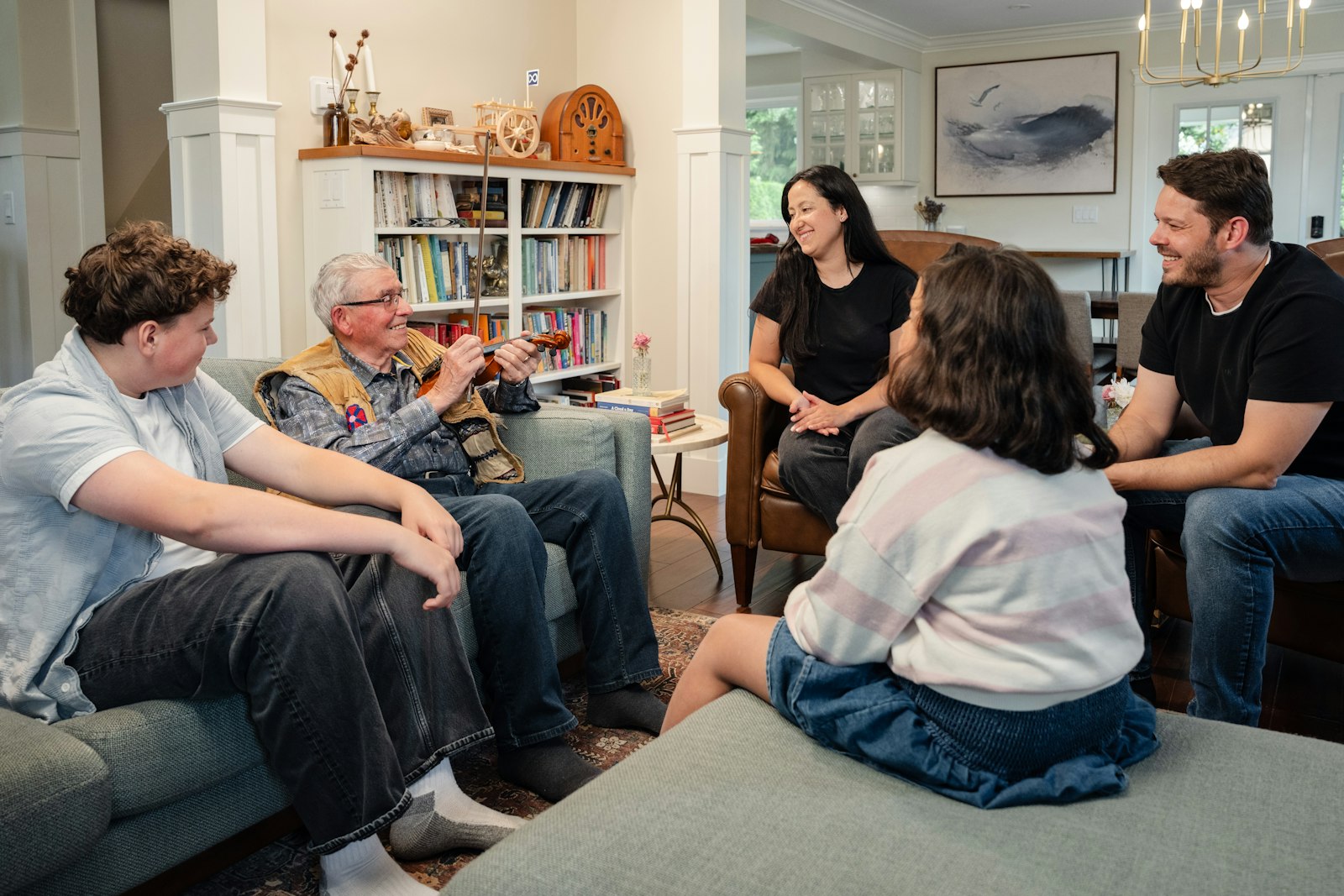
Families find their own support, too · Photo: Jelly Marketing on Unsplash
When your loved one moves into sober living
For families, the weeks after a daughter, sister, partner or mother moves into a sober living home can be a strange mixture of relief and anxiety. She’s safe — but she’s also making her own decisions now, and you are no longer the one keeping watch. Many families find this is exactly the moment Al-Anon or Nar-Anon becomes most useful.
Here’s why. In early recovery, the person in sober living is learning new routines: meetings, chores, curfew, work, step work with a sponsor. Families are learning something just as hard: how to step back. How to support without rescuing. How to listen without fixing. How to say “I love you” and “no” in the same conversation. Al-Anon meetings are full of people who have practised these things for years, and they share what worked.
A few practical ideas families often bring home from Al-Anon:
- Keep calls short and kind. Ask about her day, not her progress report.
- Let the house be the house. If you have concerns about the home’s rules or her situation, raise them through the proper channels rather than in a heated phone call.
- Take care of yourself, too. Sleep, eat, see friends. Your wellbeing is not optional.
- Remember that recovery isn’t a straight line. Progress can be real even when it’s uneven.
Not a twelve-step person? Other options in Miami
Twelve-step fellowships are the most widely available meetings in Miami, but they aren’t the only path. SMART Recovery offers meetings — in person and online — based on self-management and practical tools rather than steps and sponsorship, plus a program for family and friends. Some people also find support through faith communities, women’s groups, or recovery programs run by outpatient providers.
What matters most is consistent connection with people who understand. Many women combine approaches: an AA or NA home group, a SMART meeting for skills, therapy for deeper work, and a structured home that holds it all together.
How sober living and meetings work together
Meetings help most when they become routine, and routine is easier when your home life is stable. In a women’s sober living home, meeting attendance is usually part of the expected weekly rhythm — residents go together, share rides, and talk about what they heard over dinner. Families, meanwhile, can find their own support in Al-Anon or Nar-Anon, which often makes visits and phone calls calmer and more honest for everyone.
If you’re weighing whether a sober living home is right for you or your loved one, our guides to sober living in Miami and sober living rules and costs are a good place to start.

Different rooms, the same hope · Photo: Nguyễn Tân on Unsplash
Frequently asked questions
Can I go to both AA and NA?
Yes. Many people do, especially those with mixed substance histories. Just respect each fellowship’s focus when you share.
Can I bring my mom to an NA meeting?
To an open NA meeting, generally yes. She may also find her own support at Nar-Anon or Al-Anon.
Are there Spanish-language meetings?
Yes. Miami has Spanish-language AA meetings, and South Florida NA lists a Spanish-speaking area. Al-Anon’s search also allows you to look for meetings in other languages.
What if I’m not sure I have a problem?
You don’t need to be sure. Open AA and NA meetings welcome people who are simply curious, and many members say they first came “just to listen.” Hearing other people’s stories is often the clearest way to understand your own.
Do these meetings cost money?
No. There are no dues or fees. Groups pass a basket for voluntary contributions.
A calm home base in North Miami
Recover at Monarch · 947 NE 149th St, Miami, FL 33161 · Open in Google Maps
Recover at Monarch is a structured, supportive sober living home for women at 947 NE 149th St in Miami. Our residents attend AA, NA and other meetings throughout Miami-Dade, and we welcome questions from families too. Call (949) 438-8568 or send a private inquiry.
This article is general education, not medical or clinical advice. Everyone’s recovery is different — please speak with a qualified healthcare provider about your own situation. Recover at Monarch is not affiliated with or endorsed by Alcoholics Anonymous, Narcotics Anonymous or Al-Anon. Meeting times and locations change; confirm with the official directories before you go. If you or someone you love is in immediate danger, call 911. For crisis support, call or text 988. SAMHSA’s National Helpline is free, confidential and available 24/7 at 1-800-662-4357.