Let’s be direct: choosing a sober living home is one of the most consequential decisions a woman makes in early recovery, and it is often made in a hurry — from a hospital discharge office, a treatment centre lobby or a parent’s kitchen table at midnight. The homes all have nice photos. The websites all use the same words. This guide cuts through that. It sets out what women’s sober living actually is, what to look for in Miami, Florida and the surrounding area, and the specific questions that separate a well-run home from one you should walk away from.
What women’s sober living is — and isn’t
A sober living home, also called a recovery residence, is a substance-free, peer-supportive place to live while you rebuild daily life after treatment or alongside outpatient care. Residents pay rent, follow house guidelines, attend recovery meetings and work, study or volunteer. It is a home, not a hospital.
A women’s sober living home applies that model in a women-only setting. That matters more than it might seem. Women in early recovery frequently carry specific pressures — relationships, children and custody, caregiving, body image, past trauma, financial dependence — and many find it far easier to be honest about those things among other women. We go deeper on that in Women Supporting Women in Recovery.
What sober living is not: detox, residential treatment, psychiatric care or medical supervision. If you need any of those, start there first. Our explainer on sober living versus treatment lays out where each fits.

Why Miami and South Florida
South Florida, and Broward County in particular, has one of the densest recovery communities in the country. For a woman in early sobriety, that translates into concrete advantages:
- Meetings at every hour. AA and other mutual-support meetings run from early morning to late evening across Hollywood, Hallandale Beach, Dania Beach and Fort Lauderdale. The Broward County Intergroup directory and the Miami-Dade AA meeting directory list them.
- Outpatient care nearby. Intensive outpatient and therapy providers are close, which makes it practical to live in sober housing while continuing clinical care.
- Work and school. The Miami–Fort Lauderdale corridor has steady service, healthcare and hospitality employment, plus colleges for women restarting their education.
- A healthier way to spend free time. Hollywood’s oceanfront Broadwalk — about two and a half miles of paved promenade along the Atlantic, described in detail by the American Planning Association — is a daily antidote to empty afternoons. See our guide to sober activities in South Florida for more.
The flip side of a large recovery community is a large range of quality. Which brings us to the most important section.
Seven things to check before you choose
1. Certification
Florida runs a voluntary certification program for recovery residences. The Department of Children and Families approves the credentialing entity, and for recovery residences that is the Florida Association of Recovery Residences (FARR); recovery residence administrators are credentialed through the Florida Certification Board. You can read the state’s summary on the DCF recovery residence page. Ask any home whether it is certified, at what level, and whether you can verify that yourself.
2. Women-only — truly
Confirm that the residence houses women only, and ask about visitor policies. A women’s home should feel private and safe at every hour.
3. Written house guidelines
A well-run home can hand you its rules in writing before you move in: curfew, visitors, chores, meeting expectations, drug and alcohol testing, medication storage and what happens after a relapse. Vague answers are a warning sign. Our companion article on sober living rules and costs covers the typical rules in detail.
4. Real structure, not just a roof
Ask what a weekday actually looks like. Is there a house meeting? Expected meeting attendance? A shared dinner? Structure is what turns a shared house into a recovery environment.
5. Clear, honest pricing
You should know exactly what rent includes, when it is due, what deposits or fees apply and how refunds work. Any home that is unwilling to put its pricing in writing is not one to trust with your recovery.
6. Ethical referral and marketing practices
South Florida has, unfortunately, seen abusive “patient brokering” in the past. Be cautious of any home offering free rent, gifts, cash or travel in exchange for enrolling in a particular treatment program. Ethical homes charge fair rent and let you choose your own clinical providers.
7. The feel of the place
Visit or video-tour if you can. Is it clean? Quiet? Do the women living there seem settled? Would you be comfortable coming home there after a long day? Trust what you notice.
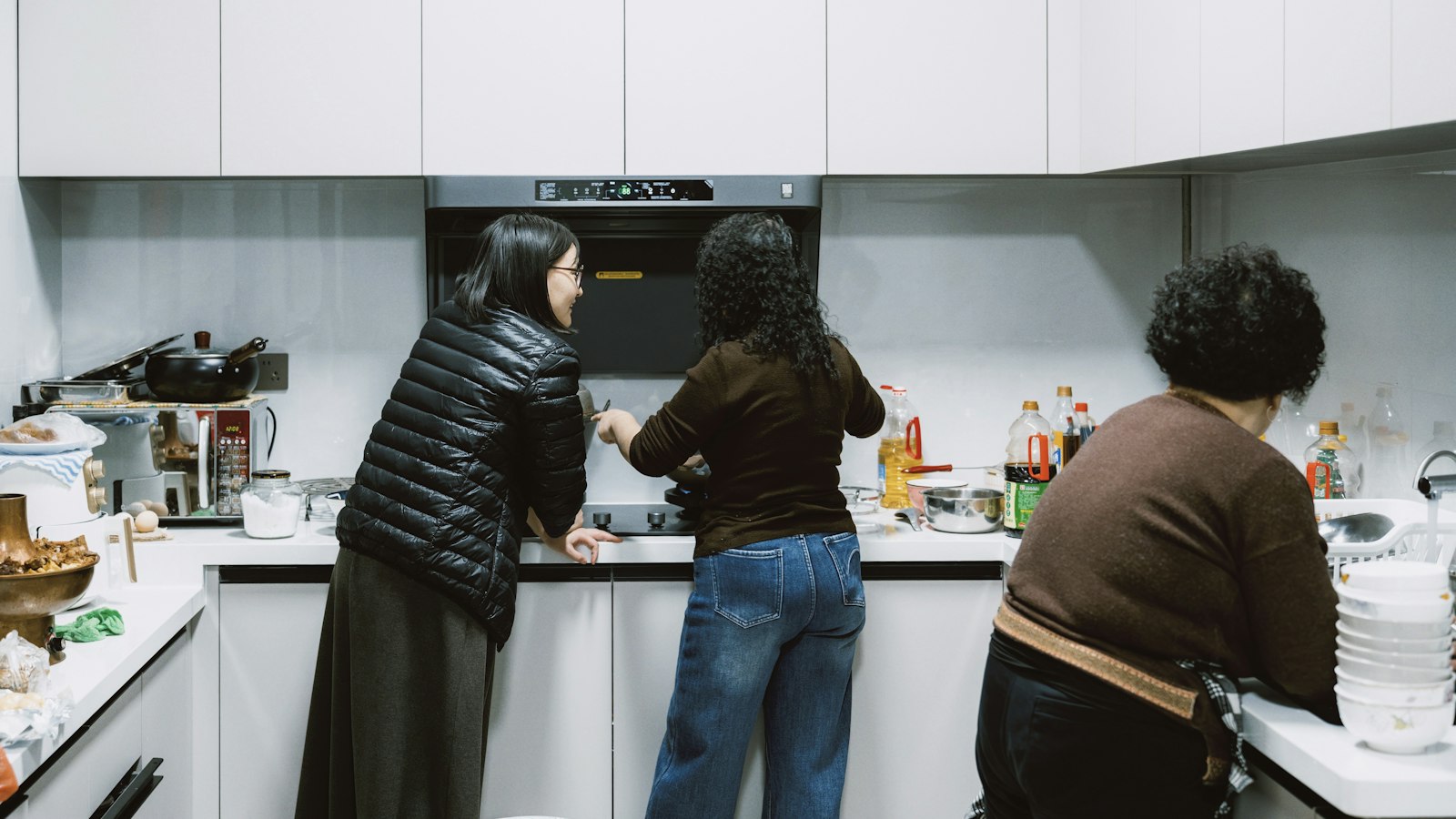
Shared meals are part of the structure · Photo: wang binghua on Unsplash
Questions to ask on the phone
Write these down and ask every home you are considering. Compare the answers side by side.
- Are you certified, and by whom?
- Is the home women-only, and how many residents live there?
- Are rooms shared or private?
- What is the weekly or monthly cost, and exactly what does it include?
- What are the main house guidelines? Can you email them to me?
- How do you handle a positive test or a relapse?
- Can I keep my own outpatient provider, therapist and doctor?
- How close are AA and other recovery meetings?
- What transportation options are nearby for work and appointments?
- How long do residents typically stay?
- Can I see the home before I commit?
A home that welcomes these questions — and answers them plainly — is telling you something important about how it is run.
Considerations that matter especially for women
Most sober living checklists are written generically. A few questions deserve extra attention when the resident is a woman:
- Family and children. If you are a mother, ask how the home handles family visits, phone calls with children and time away for custody arrangements or school events. A good home will help you keep those connections without compromising the household’s safety.
- Medications. Ask how prescriptions are stored and whether the home accepts residents using medications prescribed by their doctors, including medications for alcohol or opioid use disorder. Policies differ, and you deserve to know before you arrive.
- Safety and privacy. Ask who has keys, how visitors are managed and what happens if a resident feels unsafe. Many women in recovery have histories that make privacy and physical safety non-negotiable.
- Health appointments. Women often juggle more appointments than they expect in early recovery. Ask how schedules and transportation are coordinated.
- Self-image and self-care. The best women’s homes make room for rest, movement, nourishing meals and quiet time — the unglamorous basics that rebuild a sense of self.
Making the move from treatment
If you are finishing a residential or partial-hospitalisation program, the safest moves are the planned ones. Talk with your clinical team about discharge timing, any ongoing outpatient schedule and how your medications will be handled. Arrange the move so that you arrive at the sober living home on a weekday, during daylight, with a little time to settle in before the first evening meeting.
Pack lightly: comfortable clothing, toiletries, any prescribed medications in their original containers, identification, and a notebook. Leave behind anything that belongs to the old routine. The first week is mostly about learning the rhythm of the house, meeting the other women and finding your local meetings. That is enough.
Red flags to take seriously
- Pressure to decide today, or a “special offer” that expires tonight.
- Free rent, cash or gifts tied to attending a specific treatment program.
- No written rules, no written pricing, no written agreement.
- Residents who are clearly using, or staff who shrug it off.
- Requests to hand over your ID, benefits card or medications without a clear, documented reason.
- Reluctance to let you see the house.

South Florida streets in bloom · Photo: Josiah Holdcroft on Unsplash
What daily life usually looks like
Every home is different, but in a structured women’s residence a typical weekday might include an early start, a shared breakfast, work or outpatient programming, an evening meeting, dinner with housemates and a reasonable curfew. Weekends usually bring house chores, a house meeting, time outdoors and a little more freedom as residents build trust.
The value is in the rhythm. When the basics of the day are predictable, energy that used to go into managing chaos can go into recovery: step work, sponsor calls, rebuilding relationships, finding a job. For a fuller picture, read A New Beginning: What to Expect in Women’s Sober Living.
How long to stay
There is no universal answer. Many residents stay at least 90 days; many stay six months to a year. Research summarised by the NIAAA emphasises that recovery support works best when it continues well beyond the end of formal treatment. A good home will talk with you about your goals and help you plan a gradual, confident move to independent living rather than an abrupt exit. Our post on life skills for independent living covers that transition.
Where Recover at Monarch fits
Recover at Monarch is a structured, supportive sober living home for women. Our residence sits on a large, tree-shaded lot in North Miami — a short drive south of Hollywood and close to Biscayne Boulevard, the beaches, meetings and outpatient care. You can see the rooms, the kitchen and the backyard on our home page, and learn how days are structured in the Monarch experience.
Recover at Monarch · 947 NE 149th St, Miami, FL 33161 · Open in Google Maps
Room to rest at the end of the day · Photo: Patricia Prudente on Unsplash
We welcome every question on the list above. Call us at (949) 438-8568, read our frequently asked questions, or begin your journey with a private inquiry.
This article is general education, not medical or clinical advice. Everyone’s recovery is different — please speak with a qualified healthcare provider about your own situation. Alcoholics Anonymous is an independent fellowship; Recover at Monarch is not affiliated with or endorsed by A.A. If you or someone you love is in immediate danger, call 911. For crisis support, call or text 988. SAMHSA’s National Helpline is free, confidential and available 24/7 at 1-800-662-4357.